
Best Senior Care Options for Managing Diabetes in the Elderly
10-07-2026
Managing diabetes can become more complicated as people age. Medication schedules, meals, blood sugar checks, mobility limitations, and other health conditions can make everyday diabetes routines harder to manage independently. For families, choosing the right support can help an older adult maintain established care routines while continuing to live at home.
The best senior care options for managing diabetes in elderly individuals depend on their medical needs, independence, daily routine, and the level of assistance available from family members. Non-medical caregivers can provide practical day-to-day support, while nurses and other healthcare professionals handle clinical needs that require specialised training.

Quick Answer: What Is the Best Senior Care Option for an Older Adult With Diabetes?
The best senior care options for managing diabetes in elderly adults depend on whether the person needs help with everyday routines, clinical care, or both. Non-medical in-home caregivers can assist with meals, personal care, appointments, mobility, and established medication routines, while skilled home health professionals provide services requiring clinical expertise.
Why Diabetes Care Can Become More Challenging With Age
Diabetes management often involves several routines that must remain consistent. For an older adult, however, physical or cognitive changes can make these routines more difficult. Vision problems may make medication labels or glucose readings harder to interpret. Memory changes can contribute to missed medications or meals. Reduced mobility can make grocery shopping, meal preparation, or attending appointments more challenging. An older adult may also take several medications for different health conditions, increasing the importance of an organised daily routine.
This is why diabetes care for elderly at home should be based on the individual's existing medical plan rather than a generic approach. A caregiver does not diagnose diabetes or independently change treatment. Instead, the caregiver can help the senior follow instructions already provided by their healthcare team and report concerns to the appropriate family member or professional.
Senior Care Options for Managing Diabetes at Home
There is no single arrangement that works for every older adult. The best senior care options for managing diabetes in elderly adults can range from family assistance to professional in-home care and skilled home health services.
Family and Informal Support
Family members may be able to provide regular assistance with grocery shopping, meals, appointments, transportation, and reminders. This arrangement can work well when relatives live nearby and have schedules that allow them to provide consistent support. However, family availability can change because of work, travel, or other responsibilities. When an older adult needs assistance more frequently, professional in-home care can supplement family involvement.
Non-Medical In-Home Care
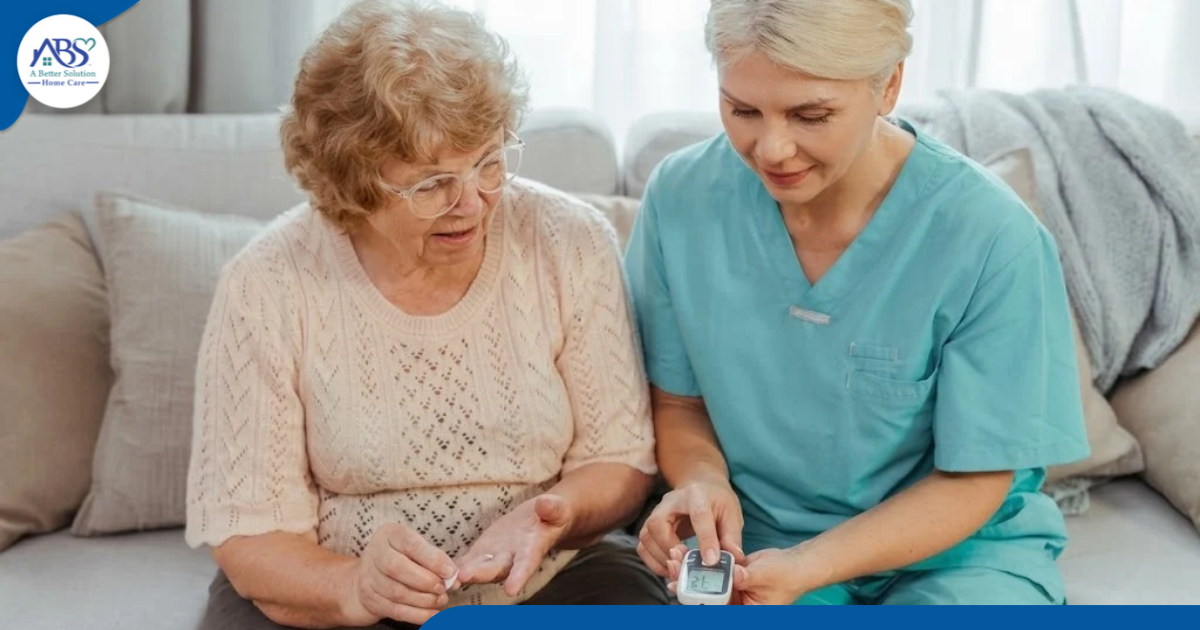
Non-medical home care can be particularly useful when an older adult is relatively stable medically but needs assistance with daily routines. This may include personal care, meal preparation, mobility assistance, companionship, errands, and appointment support. A caregiver can also provide blood sugar monitoring reminders when monitoring is already part of the senior's prescribed routine. The caregiver's role is to support the routine rather than determine glucose targets or make treatment decisions.
Similarly, medication reminders for insulin can help an older adult remember an established medication schedule when appropriate and within the caregiver's role. Caregivers should not independently change insulin doses or make clinical decisions about diabetes treatment.
Skilled Home Health Services
Some seniors need clinical services that cannot be provided by a non-medical caregiver. Depending on the individual's condition and healthcare plan, skilled home health may involve nursing assessment, diabetes education, wound care, or other prescribed clinical services. This distinction is important when arranging home care for diabetic elderly individuals. Families should understand whether their loved one needs help with daily living or requires skilled medical services.
Coordinated Care
Older adults with multiple health conditions may benefit from coordination between their primary care provider, specialists, nurses, family members, and caregivers. Clear communication helps everyone understand which tasks have been assigned to whom.
What Should a Diabetes-Friendly Home Care Plan Include?
A practical care plan should fit the senior's existing medical recommendations and daily abilities. The best senior care options for managing diabetes in elderly adults should support consistency without replacing professional medical supervision.

Medication Support
Caregivers can help seniors maintain an organised medication routine by providing reminders, helping organise supplies, and communicating concerns to family members or the healthcare team. For seniors using insulin, medication reminders for insulin may be incorporated into the established routine when appropriate. However, dosage changes, medication adjustments, and decisions about treatment should remain with qualified healthcare professionals.
Meal and Nutrition Support
Food choices and meal timing can be an important part of an individual's diabetes management plan. Diabetic-friendly meal preparation can help a caregiver prepare meals according to dietary instructions already provided by the senior's healthcare professional. The goal should not be to impose a restrictive diet without professional guidance. Instead, caregivers can help with grocery shopping, meal preparation, portioning, and maintaining consistent routines.
Blood Glucose Routines
If the healthcare team has instructed the senior to monitor blood glucose, caregivers can support the established process. Blood sugar monitoring reminders may help seniors remember scheduled checks, particularly when memory difficulties make routine management harder. Caregivers should record or communicate information according to the established care plan and report concerning changes rather than attempting to interpret results independently.
Activity and Mobility
Safe physical activity may be recommended for some older adults with diabetes, but activity should reflect their mobility and medical needs. A caregiver may assist with an appropriate walk or help the senior move safely around the home when this is part of their care plan.
When Should a Caregiver Raise a Concern?
Caregiver support for diabetic seniors is not about diagnosing complications. It involves noticing changes and communicating them promptly. A caregiver may need to notify a family member or healthcare professional when there are repeated difficulties with medications, significant changes in eating or drinking, unusual weakness or behaviour, new wounds, signs of infection, or repeated glucose readings outside the individual's prescribed range.
Confusion, difficulty staying awake, severe weakness, or other serious symptoms can require urgent medical attention. Families should follow the emergency instructions provided by the senior's healthcare team rather than relying on a caregiver to determine the cause.
How to Choose the Right In-Home Care Option
The best senior care options for managing diabetes in elderly adults should be selected according to the person's actual needs rather than simply choosing the most intensive service.

Families should consider how independently the senior manages daily activities, how frequently assistance is needed, whether mobility or memory affects routines, and whether a healthcare professional has recommended skilled services.
How A Better Solution Home Care Can Support Seniors Managing Diabetes at Home
For families seeking diabetes care for elderly at home, ABS can provide practical in-home caregiver assistance that complements the senior's established medical care. A Better Solution caregivers can support daily routines through meal preparation, personal care, mobility assistance, companionship, errands, and other appropriate activities. Caregiver support for diabetic seniors can also make it easier for families to maintain continuity when they cannot be present throughout the day.
For example, diabetic-friendly meal preparation can help an older adult follow an existing nutrition plan, while blood sugar monitoring reminders can support consistency with a healthcare provider's recommended routine. Caregivers do not replace physicians, nurses, or other healthcare professionals. Instead, they provide day-to-day support while communicating relevant concerns to the family or appropriate care team.
For families considering home care for diabetic elderly loved ones, this distinction can make it easier to choose services that match the senior's needs.

Choosing the Right Support for Diabetes at Home
The best senior care options for managing diabetes in elderly adults depend on the level of assistance, medical complexity, and independence of each individual. Some seniors may need occasional family support, while others benefit from regular non-medical caregiving or a combination of in-home care and skilled healthcare services.
The right support can make everyday routines more manageable without taking medical decisions out of the hands of qualified professionals. For families, the priority is finding an arrangement that fits the senior's established care plan and provides reliable assistance at home.
Need help supporting an older adult at home? A Better Solution provides in-home care designed around seniors' daily needs and established routines. Visit abs.care or call 866-945-7973 to learn more about available care options.